


















|
Listen to article
|
Peter Obi joined protesters at Nigeria’s National Assembly on Monday, demanding lawmakers reverse a decision that opposition groups say weakens safeguards for electronic transmission of election results ahead of the 2027 vote.
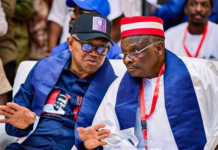
The former presidential candidate, who defected from the Labour Party to the African Democratic Congress, told demonstrators that elections should proceed transparently without artificial obstacles. “Simple transmission is not a difficult thing,” he said outside the legislative complex in Abuja. “Allow the election to go through the normal process; whoever wins, we will accept.” Hundreds of protesters gathered under the banner “Occupy National Assembly” to challenge the Senate’s handling of electoral legislation. The demonstration drew civil society activists, opposition party members, and youth groups concerned that recent amendments undermine reforms introduced after Nigeria’s troubled 2023 elections.
At issue is Section 60 of the Electoral Act Amendment Bill, which governs how election results move from polling stations to central tallying centers. The Senate passed the bill Wednesday but rejected language requiring presiding officers to upload results to the Independent National Electoral Commission’s electronic portal “in real time.” Instead, lawmakers retained wording from the 2022 Electoral Act allowing results to be “transferred” using methods prescribed by INEC, without specifying electronic transmission or establishing time limits. Critics say the vague language creates loopholes that enable manipulation and delays.
Senate President Godswill Akpabio defended the decision at a weekend event, saying the chamber supports electronic transmission but removed the phrase “real time” to account for network failures. “If you say real-time, then there is a network or grid failure and the network is not working,” he said. “When you go to court, somebody will say it ought to have been real-time.” The explanation satisfied few critics. Several senators, including Enyinnaya Abaribe, Aminu Tambuwal, and Natasha Akpoti-Uduaghan, held a press conference Thursday claiming the Senate leadership misrepresented what lawmakers actually voted on during Wednesday’s session. “We want a law that is clear, concise, and can be interpreted by all and that is unambiguous, so it is electronic transmission of results,” Abaribe said. “I can assure you on my honour that both the electoral committee of the Senate and the ad-hoc committee agreed on Section 60(3) which is electronic transmission of results. Transmit, not transfer.”
The senators said they voted to mandate electronic transmission during the session but that the announced outcome differed from the vote count. They accused Akpabio of altering the bill’s language after passage, charges the Senate president has not directly addressed.
Read Also: Transmission: Don’t Speak For INEC – Mark Blasts Akpabio
Obi arrived at the protest site Monday morning and addressed demonstrators, emphasizing his presence aimed to pressure the Senate ahead of Tuesday’s emergency session. “I am here to make sure that the Senate makes the right decision when it sits on Tuesday,” he said. The ADC politician has emerged as a leading voice against the electoral changes since the Senate vote. In a statement last week, he described the decision as “fantastically corrupt” and a deliberate effort to create confusion ahead of the 2027 elections. “The Senate’s open rejection of electronic transmission of results is an unforgivable act of electoral manipulation,” Obi wrote. He linked the 2023 presidential election’s disputed outcome to INEC’s failure to consistently use electronic transmission, saying technical failures cited by the commission were often excuses for deliberate obstruction.
Opposition parties including the Peoples Democratic Party and New Nigeria People’s Party condemned the Senate action as evidence the ruling All Progressives Congress fears transparent elections. The Nigeria Labour Congress warned of potential nationwide strikes and election boycotts if lawmakers do not mandate real-time transmission.
Human rights activist Omoyele Sowore announced Sunday that the National Opposition Movement would maintain pressure on the Assembly. “We will occupy the National Assembly complex from Monday until we see the outcome,” he said, calling the removal of electronic transmission language an attempt to undermine electoral credibility.
Security forces deployed heavily around the legislative complex Monday morning. Officers from the Nigeria Police, Army, and Civil Defence Corps established cordons and checkpoints. Authorities urged demonstrators to assemble at a designated park but organizers refused, gathering instead at the Assembly gates. The Senate scheduled an emergency session for Tuesday following days of mounting criticism. Clerk of the Senate Emmanuel Odo issued a notice Sunday directing all senators to attend on Akpabio’s instructions, though no agenda was published. Whether the Senate will reconsider its position remained uncertain Monday. Some APC senators privately expressed concern about the backlash but said party leadership discouraged revisiting the issue. Opposition senators pledged to force a floor vote demanding explicit language on electronic transmission.
Nigeria’s 2023 presidential election generated controversy when INEC failed to upload results to its electronic portal as anticipated. The commission blamed technical problems, but opposition candidates accused officials of deliberately withholding data to facilitate manipulation.
Read Also: INEC Warns Elections Lack Credibility Without Security
The Supreme Court dismissed challenges by Atiku Abubakar of the PDP and Obi, who ran for Labour Party at the time, affirming Bola Tinubu’s victory. Justices ruled that while INEC’s electronic transmission failures were regrettable, they did not constitute grounds for overturning results since existing law made the technology optional rather than mandatory. Electoral reform advocates have since pushed for legislation requiring electronic transmission to prevent similar disputes. The 2022 Electoral Act authorized electronic transmission but left implementation details to INEC’s discretion, creating ambiguity that courts said favored manual processes.
The current amendment bill seeks to clarify those provisions ahead of 2027 voting. The House of Representatives passed a version explicitly requiring real-time electronic upload, setting up a conflict with the Senate’s approach.
A joint conference committee is expected to reconcile the differences, but protesters say they lack confidence the final product will reflect public demands for transparency. “The conference committee has historically been where good provisions go to die,” said one civil society organizer at Monday’s demonstration.
Obi told reporters he would maintain public pressure throughout the reconciliation process. “We cannot allow them to create conditions for another stolen election,” he said. “Nigerians deserve better.” The ADC politician lost the 2023 election but claimed victory based on results his party agents collected at polling stations. His supporters remain convinced electronic transmission would have validated their claims and prevented what they describe as a rigged outcome.