



















|
Listen to article
|
A Tunisian appeals court on Tuesday upheld and increased long prison sentences against prominent politicians and former officials, including opposition leader Rached Ghannouchi, deepening a sweeping crackdown on dissent under President Kais Saied.
The ruling came in a high profile conspiracy case that authorities say involved attempts to undermine state security. Defendants and their supporters reject the accusations, calling the case politically motivated.
The decision reinforces concerns among rights groups about the direction of Tunisia’s justice system since Saied consolidated power in 2021.
Rached Ghannouchi, the 84 year old head of the Islamist leaning Ennahda party, received a 20 year prison sentence, up from an earlier 14 year term.
Ghannouchi, who served as speaker of parliament before it was dissolved by Saied, has been behind bars since 2023. With the latest ruling, his cumulative sentences across multiple cases now total 50 years.
Ghannouchi has repeatedly denied wrongdoing and says the prosecutions are aimed at eliminating political opposition.
Read Also: Tunisia’s President Inaugurated For Second Term Amidst Protests
Among those sentenced was Nadia Akacha, a former chief of staff to President Saied. She received a 35 year prison term after being convicted in absentia, according to Tunisia’s state news agency TAP.
Akacha left the country before her trial and remains abroad. She was accused alongside other defendants of conspiring against the state.
The appeals court also upheld 35 year sentences against former intelligence chief Kamel Guizani, former foreign minister Rafik Abdessalem, and Mouadh Ghannouchi, the son of Rached Ghannouchi. All three are currently outside Tunisia.
In total, 21 people were charged in the case. Ten are currently in custody, while 11 have fled the country, according to court records.
Read Also: Tunisians Rally Heavily Against President Saied Ahead Of Poll
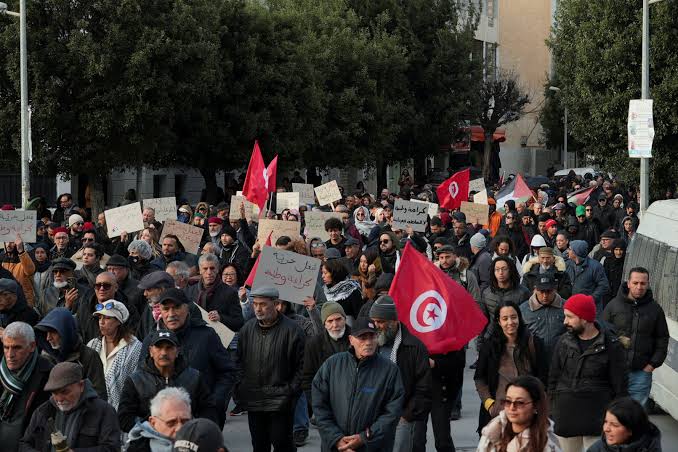
The accused say the case was fabricated to silence critics of President Saied. Lawyers and opposition figures argue that normal political activity has been criminalised under vague national security laws.
Most major opposition leaders, as well as some journalists and public critics, have been imprisoned since Saied assumed sweeping powers in 2021.
That year, Saied dissolved parliament, began ruling by decree, dismantled the independent Supreme Judicial Council, and dismissed dozens of judges. His opponents described the moves as a coup that reversed democratic gains made after the 2011 uprising that sparked the Arab Spring.
Saied has rejected those claims, insisting his actions were lawful and necessary to end years of political paralysis and corruption within Tunisia’s ruling elite.

