



















|
Listen to article
|
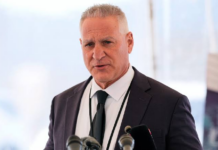
Pastor Kingsley Okonkwo, founder of the David Christian Centre and a well-known Nigerian relationship coach, has defended his decision to get a tattoo, pushing back against criticism from some Christians who argue that tattoos are forbidden by scripture.
The pastor sparked debate on social media after revealing a tattoo inscribed with “3:16” in Roman numerals—a reference to John 3:16, one of the Bible’s most cited verses. Critics quickly condemned the move, citing Leviticus 19:28, which warns against marking the body.
In response, Okonkwo said there is no biblical passage that explicitly forbids Christians from having tattoos, arguing that opposition is largely driven by tradition and personal beliefs rather than doctrine.
“There’s no scripture that says a child of God cannot have a tattoo,” Okonkwo said in an interview. “People are acting based on personal preference, what their church taught them, or what they believe the Holy Spirit told them—and then they try to impose that on others.”
He challenged critics to provide concrete justification for their position, either scriptural or scientific.
Read Also: There Is No Religious Discrimination In Abia State – Gov Otti
“Somebody should sit me down and explain why tattoos are bad,” he said. “If drawing ink on the body suddenly makes someone’s brain or character go bad, show me the proof. Nobody can tell me why tattoo is bad—it’s just bad because… no reason.”
Okonkwo argued that the controversy reflects a deeper issue within Christian communities, particularly in Africa, where cultural norms are sometimes elevated to the level of doctrine.
“This way of thinking is saddening,” he said. “How is Africa going to catch up with development if we are still reasoning like, ‘Someone wore jeans and robbed a bank, so jeans are now bad’?”
He added that tattoos, like politics or certain professions, are often dismissed because of their association with negative stereotypes.
“People say politics is for bad people, so the good ones stay away. Then we complain about corruption,” Okonkwo said. “The church has avoided anything that looks bad, and then wonders why nothing changes.”
Read Also: Boko Haram Conflict Is Not A Religious Crisis – Gov Zulum
The pastor further addressed critics in a TikTok video, accusing them of hypocrisy and selective morality. He pointed to practices that were once frowned upon in Nigerian churches but are now widely accepted.
“Today I see Christian girls buying human hair and wearing it to church, yet they are typing against tattoo,” he said. “You don’t even know where that hair came from.”
Okonkwo noted that makeup, earrings, and even jeans were once condemned as sinful within many churches.
“There was a time you couldn’t wear earrings, makeup, or jeans to church,” he said. “Some of you didn’t know this. Today you do eyebrow work and microblading—do you know that eyebrow is a form of tattoo?”
He added that head coverings for women were once mandatory and that those restrictions were challenged over time by changing interpretations of scripture.
“Jeans were called ungodly garments a few years ago,” he said. “Now we all wear them. So who was leading people astray then?”
Religious scholars note that debates over tattoos are not new within Christianity. According to reporting by the BBC and Reuters on evolving Christian practices globally, many modern theologians argue that Old Testament ceremonial laws are not binding on New Testament believers, while others maintain traditional interpretations.
The discussion has gained renewed attention as social media allows religious leaders and followers to openly debate doctrine in public spaces.