

















|
Listen to article
|
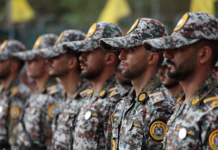
China’s People’s Liberation Army staged a second day of large-scale military drills around Taiwan on Tuesday, unleashing a live-fire show of force as part of what it called “Justice Mission 2025″ to demonstrate its ability to deter any external support for the island it claims as part of its sovereign territory.
Taiwanese officials said some of China’s live rounds landed closer to the island than before.
The maneuvers increased tension around the Taiwan Strait as 2025 drew to a close, but the impact extended beyond military pressure into everyday life. Taiwan’s Civil Aviation Administration was notified that seven temporary “dangerous zones” had been set up around the strait. The schedules of Taiwan’s four international airports on Tuesday afternoon showed over 150 international and domestic flights had revised times, delays or cancellations.
Read Also: Chinese Embassy Condemns US Arms Sales To Taiwan
Xinhua, China’s official news agency, posted a commentary late Monday saying the drills sent an unequivocal message: That Beijing is always ready to prevent anything that tries to split Taiwan from China. Each escalation, it said, would be met with stronger countermeasures
“By currying favor with the United States through obsequious loyalty gestures and promoting arms purchases, the DPP is binding the entire island of Taiwan to its catastrophic secessionist chariot, disregarding public opinion,” it wrote, referring to Taiwan’s ruling Democratic Progressive Party.
Stay up to date with the news and the best of AP by following our WhatsApp channel.
The PLA’s Eastern Theater Command sent destroyers, frigates, fighters and bombers to the waters to the north and south of the island to test its ability in sea-air coordination and blockading. Its ground forces carried out long-range, live-fire drills in the waters to the island’s north. They also organized live-fire training alongside simulated long-range joint strike with air, navy and missiles units, in the waters to Taiwan’s south, achieving what command spokesperson Li Xi called “desired effects.”
Hsieh Jih-sheng, deputy chief of the general staff for intelligence at the Taiwanese Defense Ministry, said some of the 27 rockets detected in the waters near Taiwan fell within its 24-nautical-mile (44-kilometer) line. “The landing points of rounds definitely were closer to Taiwan compared to the past,” he said. “This is a message it deliberately wants to convey.”