













|
Listen to article
|
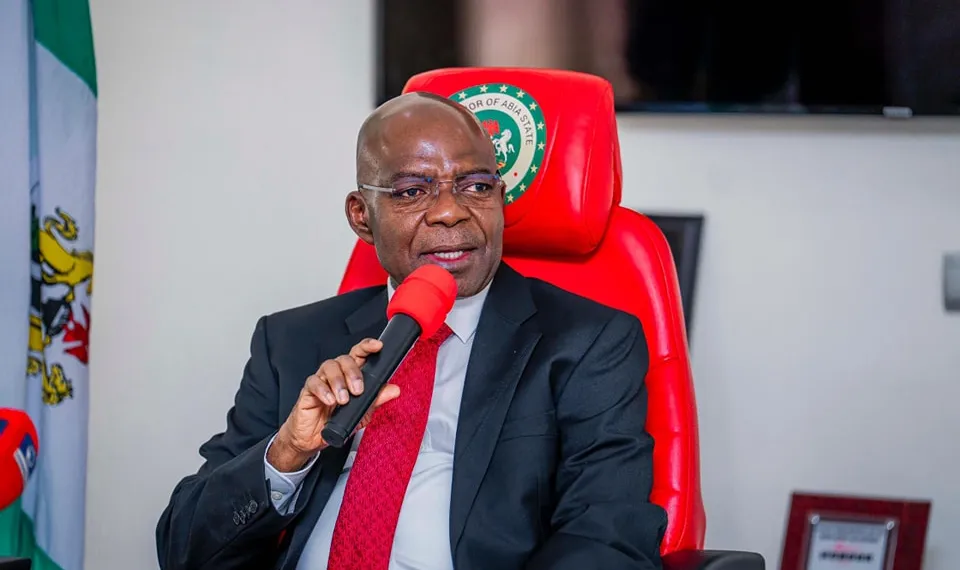
The debate over Abia State’s finances has taken on a new intensity, as Obinna Oriaku, a former commissioner for Finance and Budget Planning, calls on the government to provide a clearer account of how federal allocations and internally generated revenue are being used. Oriaku, who served in the Ikpeazu administration, says the time has come for Governor Alex Otti to openly explain what he describes as widening gaps in the state’s financial disclosures.
His concerns are surfacing at a moment when several voices in the state are asking similar questions. Weeks earlier, the deputy Speaker of the House of Representatives, Benjamin Okezie Kalu, urged the government to take greater care with rising allocations coming into Abia. While addressing a coalition of political supporters last month, Kalu said the state had received an unusually high flow of inflows during the second quarter of the year. He pointed to figures suggesting Abia received about 38 billion naira each month from federal allocations and other accruals.
Governor Otti rejected the claim and insisted the state’s monthly revenue stands around 15 billion naira. But the argument did not end there.
Oriaku returned with a detailed critique in a new article titled Abia’s Q3 2025 Financial Report: Unanswered Questions, Conflicting Figures and Rising Transparency Concerns. He said the administration’s newly released Q3 report, which was reviewed by Progressives Abia Youth, raises more questions than answers. The presentation, he argued, looked orderly at first glance, but the numbers inside it told a story that conflicts with what residents can see on the ground and what the government itself previously said.
He pointed to a revenue total of 91 billion naira in the third quarter, down from the 114 billion naira recorded in the second quarter. For him, the drop confirms that the earlier surge in Q2 was driven by non FAAC revenues, a detail the government has avoided acknowledging. The puzzling part, he said, is that Q3 coincided with some of the highest federal disbursements seen nationwide this year. July recorded 1.9 trillion naira, August climbed to 2.3 trillion and September delivered another 2.1 trillion, figures that made the national headlines. The state’s own internally generated revenue also reportedly rose from 13.3 billion to 18 billion naira during the same period.
With these numbers in mind, Oriaku said it is difficult to understand why the government continues to deny receiving an average of 38 billion naira monthly between April and June. He laid out the arithmetic. Abia received 84 billion naira in the first quarter, an average of 28 billion monthly. That figure rose to 114 billion in the second quarter, translating to 38 billion monthly. In the third quarter, the 91 billion recorded amounts to about 30.3 billion monthly.
Read also: Otti Launches Security Fund, Vows Battle Against Criminals
For him, the pattern is clear enough, but the denial is what has deepened mistrust. Residents, he said, have started to wonder why neighbouring states like Enugu and Imo have rolled out flagship projects funded from similar inflows, while Abia continues to showcase only modest roadwork. He added that state officials often insist on being judged through the lens of older administrations, even though today’s economic climate is far more favourable than what previous governments had to work with.
Oriaku said the public has every right to ask what is happening to more than 30 billion naira that comes into the state each month from FAAC alone. This is separate from the allocations that go to the 17 local governments, which amount to roughly 11 billion naira monthly. Taken together, he said, the inflow into the state surpasses 40 billion naira every month, a figure that should be accompanied by clearer financial reporting.
He also took issue with what he called suspicious patterns in the way the government records expenditure. According to him, several controversial items that drew public criticism earlier in the year have disappeared from the latest report. The nearly one billion naira security vote and the 300 million naira Government House feeding bill, which drew widespread backlash and were highlighted on national television, no longer appear under their original labels. They have re-emerged under what he described as an ambiguous category titled Research and Development, a line item that he said has consumed more than 34 billion naira since 2023 without any visible or measurable output.
The third quarter breakdown, he continued, includes a 14.4 billion naira allocation for Land and Housing. He is asking the governor to explain the figure in more detail. If it involves compensation payments, he said, the state should identify who received them between July and September. There is currently no major housing project underway that would justify such a large commitment. The same applies to a 6.7 billion naira recreational facility that has been mentioned since last year but remains unseen.
Another figure he questioned is the 82 billion naira the government says it has spent repairing public schools between January 2024 and September 2025. According to him, residents across the state say the work claimed does not match what is visible in the schools that serve their communities.
He also raised concerns about the 9.1 billion naira allocated to the Transport sector. He asked whether the figure is tied to the electric bus project that expanded from 20 buses to 100 without any formal explanation. The delivery date for the project has already passed, he said, and the state should disclose how many buses have actually been purchased and at what cost.
Oriaku said the broader issue is not politics but clarity. Abia, he argued, needs a government that allows its citizens to see where their money is going. The public should be able to verify spending without navigating conflicting figures, shifting categories or disappearing expenditure items. Until these inconsistencies are resolved, he said, the credibility of the state’s financial reporting will continue to face serious doubt.