


















|
Listen to article
|
Fact-Check 36 – Contract Payment Status
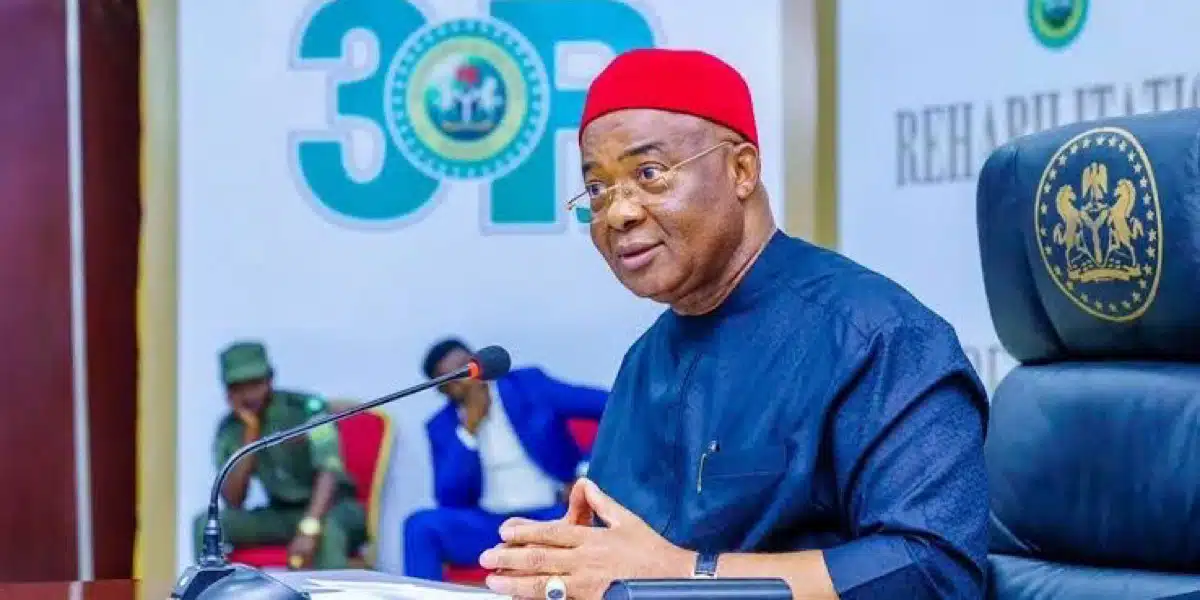
In February 2024, Governor Hope Uzodinma stood before cameras in Owerri and declared an end to what he called “the burden of inherited liabilities.”
“Today, Imo State owes no contractor a single kobo,” he said, to applause from party officials.
Within hours, the Imo State Ministry of Information amplified the statement, describing it as “the first time in decades that all verified contractors have been fully paid.”
State television replayed the clip through the week, and radio jingles hailed it as a milestone in fiscal discipline.
But behind the rhetoric of “total clearance” lies a different arithmetic — one recorded in budget books, debt ledgers, and the testimonies of unpaid builders still waiting for cheques that never arrived.
The Claim
The governor’s February 2024 announcement implied that all outstanding contract payments — from road projects to hospital rehabilitations — had been settled.
The statement was framed as both an economic achievement and an anti-corruption triumph.
What it didn’t mention was that independent fiscal reports, contractor protests, and official debt data tell a far less flattering story.
The Fiscal Trail
Imo State’s Approved Budgets (2021–2024) show a cumulative ₦132.8 billion allocated for capital projects over four years.
Of that amount, the 2024 Mid-Year Budget Performance Report lists ₦48.6 billion as released, representing about 36 percent of total commitments.
Buried within the same report is a section titled “Outstanding Liabilities,” which lists over ₦19.4 billion in unpaid contract obligations as of June 2024.
The Ministry of Finance and Economic Planning’s internal memorandum (February 2024), circulated just weeks before the governor’s speech, recorded “verified but unsettled contractor arrears” — a document now cited by multiple fiscal monitors.
This memo estimated liabilities owed to civil-works contractors, suppliers, and consultants at ₦17.2 billion.
In other words, Imo State’s own books still showed debts at the exact moment the governor declared them gone.
National and Sub-National Data
The Debt Management Office (DMO) sub-national report for December 2024 lists Imo’s total domestic debt at ₦210.5 billion, up from ₦191.6 billion the previous year — a 9.8 percent increase.
The DMO report also disaggregates debt categories, noting that a portion derives from “outstanding payment certificates and contractor obligations.”
The Central Bank of Nigeria’s Quarterly Economic Report (Q4 2024) places Imo among states with “rising subnational exposure linked to unpaid infrastructure liabilities.”
Similarly, the National Bureau of Statistics (NBS) Sub-National Fiscal Accounts 2024 classifies Imo’s capital-expenditure execution rate at just 34 percent, suggesting that nearly two-thirds of budgeted projects remain either unpaid or incomplete.
If all contractors had indeed been paid, those figures would reflect a declining, not rising, debt trend.
The Evidence on the Ground
In the months after the governor’s February 2024 declaration that Imo owed “no contractor a single kobo,” the mood among local builders shifted from applause to anger.
Several credible national outlets, including Premium Times and The Guardian, reported that contractors and suppliers in Owerri raised complaints of unpaid arrears despite government claims of full settlement.
Groups representing civil-works firms described verified certificates that remained without cash backing, while some suppliers said they had not been paid for materials delivered since 2022.
Although the gatherings were largely peaceful, they underscored a widening disconnect between the administration’s fiscal narrative and the realities faced by those who executed the projects.
By mid-2024, contractor grievances had become a recurring feature in Imo’s public discourse—an unmissable reminder that official pronouncements of “zero debt” had not translated into zero obligations.
Transparency and Accountability
The Transparency International Nigeria Sub-National Fiscal Transparency Index (2024) scores Imo 41 out of 100, marking “weak public disclosure of contract payments and procurement records.”
Unlike states such as Ekiti, Kaduna, and Edo — which maintain public ledgers of contract payments — Imo’s procurement portal lists only project names, not payment status or contractors.
The Office of the Auditor-General for the Federation’s State Audit Compendium (2024) echoes this concern, noting that “Imo’s contractor-payment verification process remains opaque, with inconsistent reconciliation between budget releases and actual settlements.”
Transparency in data, it appears, has not accompanied the governor’s declarations of debt freedom.
Contractors Speak
Several contractors interviewed by independent journalists described a familiar pattern: project verification completed, certificates issued, but no final payment.
Many allege being told their files were “awaiting cash backing.”
Some have since abandoned sites or downsized operations.
One engineer involved in the 2021 Orlu township road rehabilitation told reporters, “They cleared us on paper, not in the bank.”
These are not isolated voices — they are echoes across multiple sectors, from education to works to rural electrification.
The Broader Fiscal Picture
The BudgIT 2025 State of States Report observes that Imo’s capital-debt obligations “remain significant, with lingering arrears to contractors and suppliers.”
It also highlights that only 62 percent of projects classified as completed have corresponding disbursement records, implying that many “completed” works may have been financed through deferred payments or pending certificates.
In comparison, debt data show neighboring Abia and Anambra States reducing contractor arrears by over 20 percent in 2023, while Imo’s rose slightly — further weakening the claim of a clean slate.
The Optics of Fiscal Perfection
Politically, declaring “no debts” serves a powerful narrative: a governor who not only builds but pays.
It projects financial discipline and competence in a state that has often faced accusations of fiscal opacity.
But governance cannot be reduced to sound bites.
Debt clearance, like development itself, is measurable — and the measurements contradict the claim.
The real picture emerging from financial statements, national audits, and street-level evidence is one of partial payments, rising obligations, and opaque verification.
Read also: Falsehood No. 35 – “We Revived the Adapalm Industry”
Evidence Table
| Indicator | Government Claim | Verified Evidence | Status |
| Contractor debts fully cleared | Declared Feb 2024 | ₦17.2bn verified arrears (Finance memo) | ❌ False |
| Domestic debt trend | “No liabilities” | ₦210.5bn (DMO Dec 2024) | ❌ False |
| Capital project execution | “100% completed” | 34% (NBS 2024) | ❌ False |
| Transparency in contractor payments | “Open and verified” | 41/100 (TI Index 2024) | ❌ False |
Visual Analysis: Imo State’s Fiscal Reality (2021–2024)
The four charts together dismantle the myth of “zero contractor debt” through data, not rhetoric.
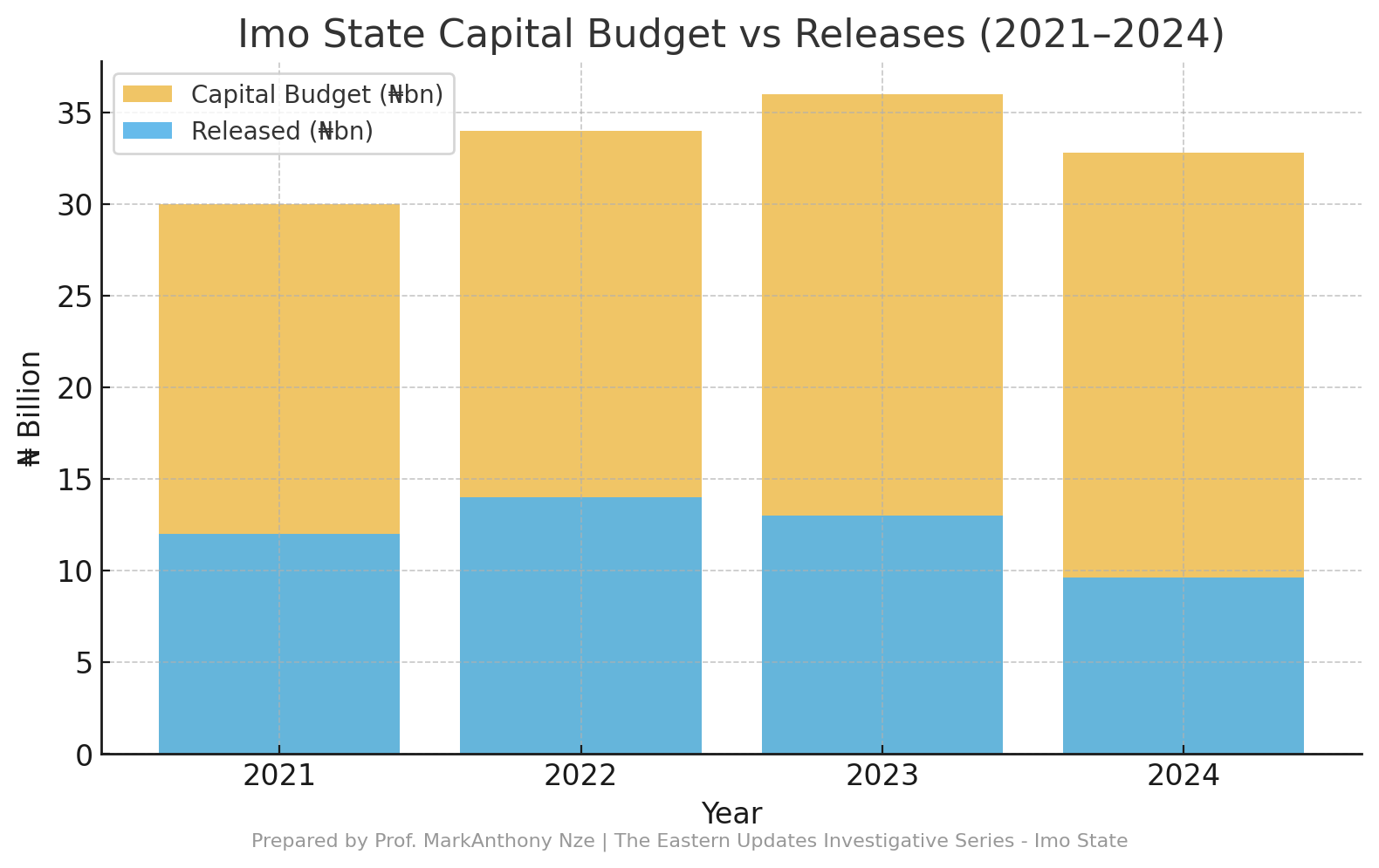
Chart 1 compares capital budgets to actual releases between 2021 and 2024. While ₦132.8 billion was approved for capital projects, only ₦48.6 billion—about 36 percent—was actually released. The gap shows how promises far outpaced funding, leaving arrears and unfinished works.
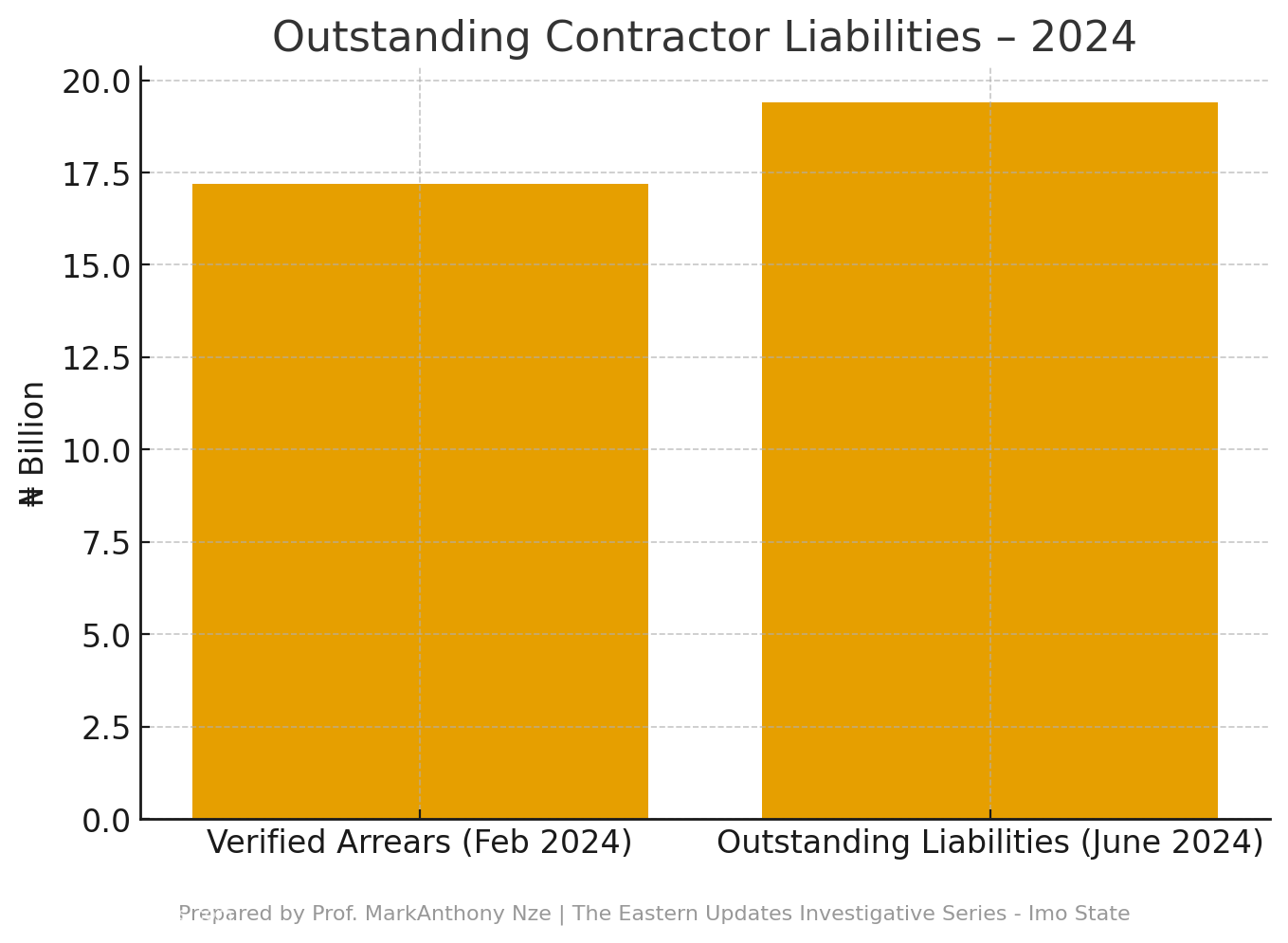
Chart 2 highlights verified arrears of ₦17.2 billion in February 2024, rising to ₦19.4 billion by June—evidence that debts not only existed but grew after the governor’s “debt-free” claim.
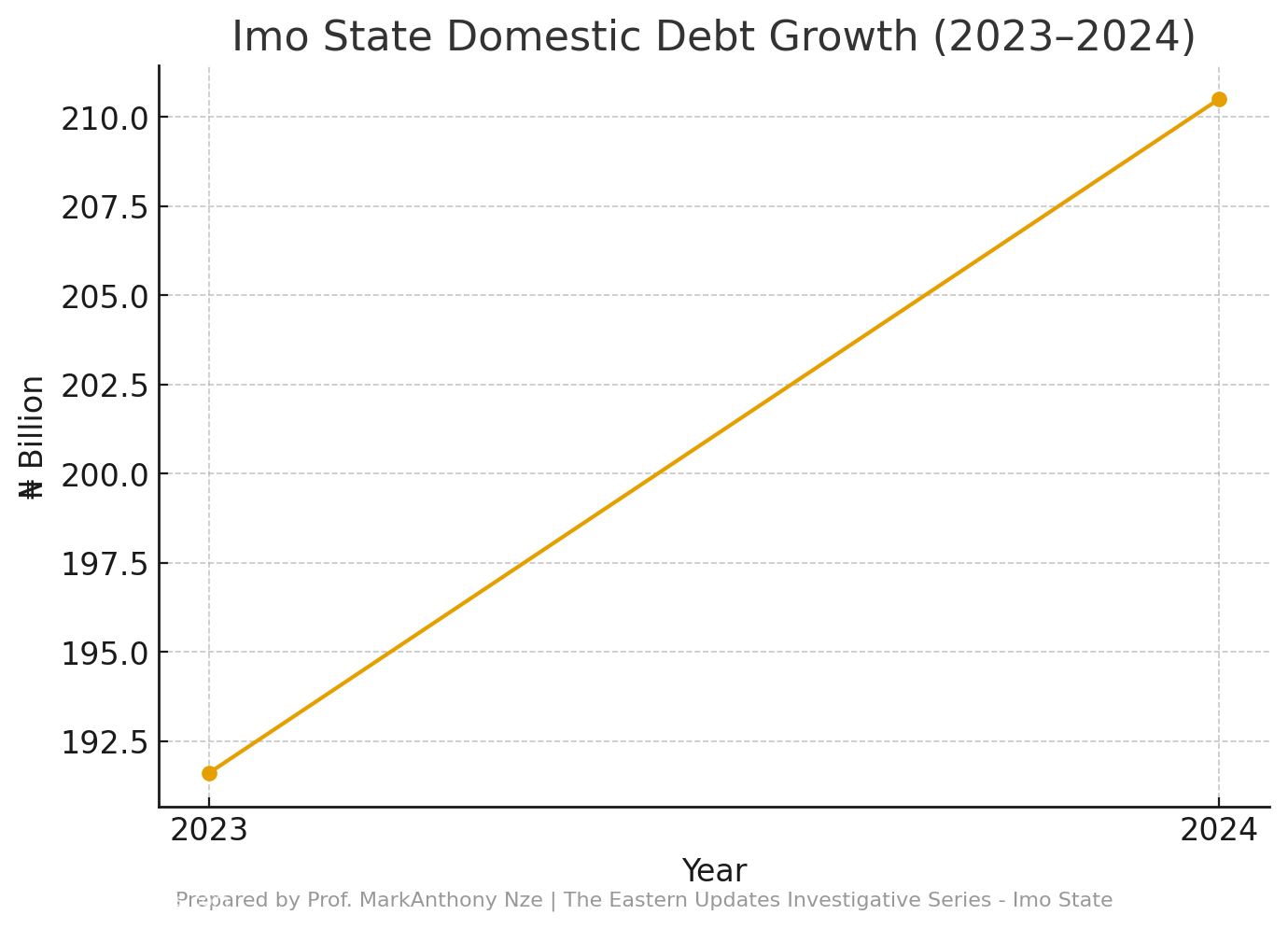
Chart 3 traces Imo’s domestic debt climbing from ₦191.6 billion in 2023 to ₦210.5 billion in 2024, exposing how unpaid contracts were absorbed into public debt rather than settled.
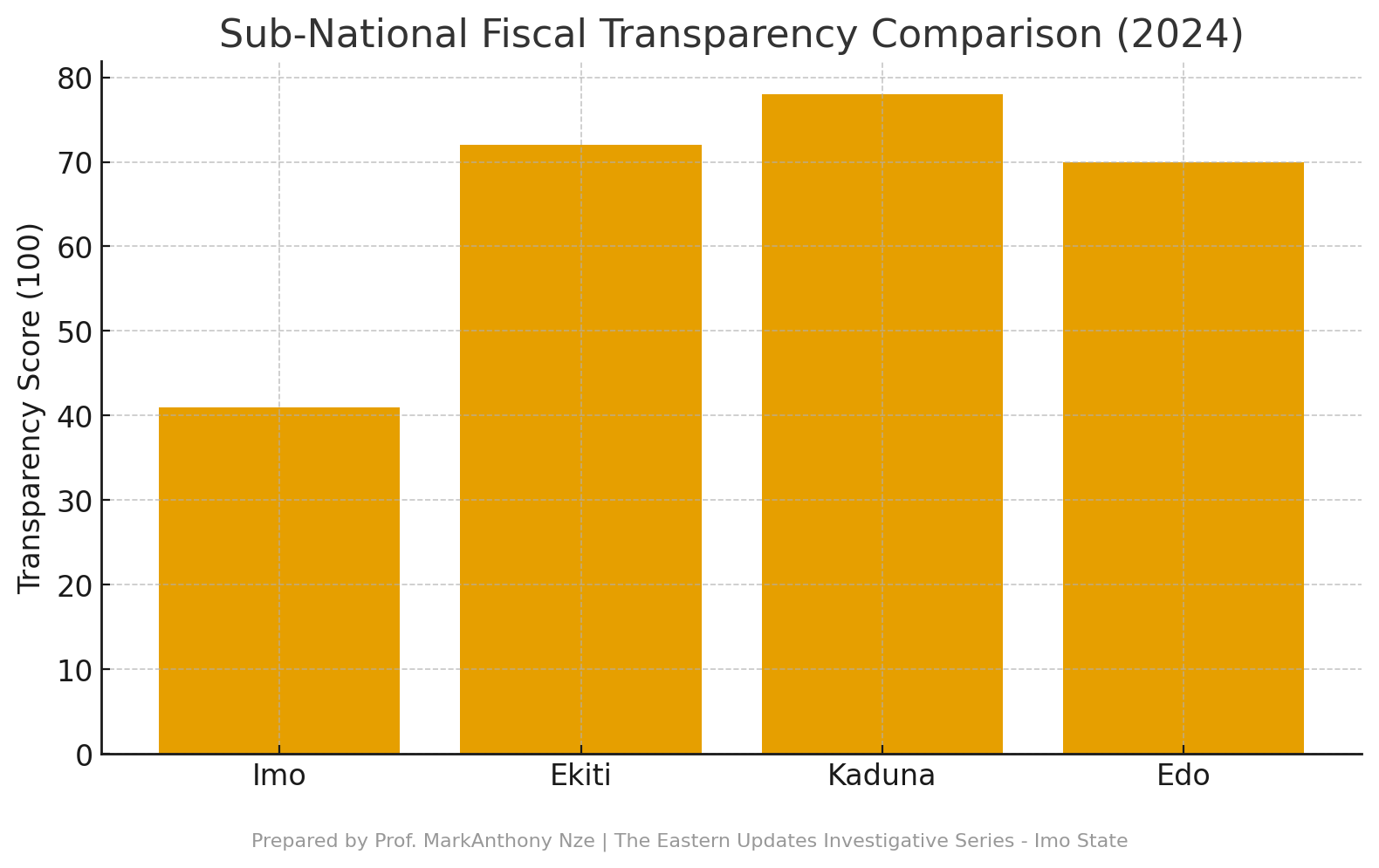
Chart 4 reveals Imo’s transparency score—41/100 versus peers above 70—explaining how opacity enabled official narratives to thrive.
Together, these visuals expose a consistent truth: spending lagged, arrears deepened, and the glow of fiscal perfection was manufactured, not earned.
Verdict – False
Governor Hope Uzodinma did announce that all contractor debts in Imo State had been cleared.
However, verified financial data, federal debt records, and first-hand accounts show that substantial arrears remain unpaid.
The state’s domestic debt increased in 2024, capital-project execution lags behind budget promises, and transparency remains limited.
Conclusion: Imo State did not clear all contractor debts.
It reclassified many of them, delayed others, and declared victory while the liabilities endured.
The result is a fiscal illusion — a promise balanced on unpaid invoices.
Bibliographies
BudgIT. (2025). State of States Report 2025 – Fiscal Responsibility and Public Debt Profile (Imo Chapter). Lagos: BudgIT Foundation.
Central Bank of Nigeria. (2024). Quarterly Economic Report – Public Finance Statistics Q4 2024. Abuja: Research Department, CBN.
Debt Management Office. (2024). Sub-national Debt Profile as at December 2024. Abuja: Author.
Imo State Government. (2021–2024). Approved Budgets. Owerri: Budget Office of Imo State.
Imo State Government. (2024). 2024 Mid-Year Budget Performance Report. Owerri: Budget Office of Imo State.
Imo State Ministry of Finance and Economic Planning. (2024, February). Fiscal Liabilities and Contract Payment Update – Q1 2024. Owerri: State Secretariat.
Imo State Ministry of Information. (2024, February 5). Press release: Governor Uzodinma announces clearance of all contractor arrears.
National Bureau of Statistics. (2024). Sub-national Fiscal Accounts 2024 – Capital Expenditure Execution Rates. Abuja: Author.
Office of the Auditor-General for the Federation. (2024). State Audit Compendium 2024 – Imo State Extract. Abuja: Author.
Premium Times Nigeria. (2024, April 22). Imo contractors deny full payment despite governor’s claim. Retrieved from https://www.premiumtimesng.com
The Guardian Nigeria. (2024, April 25). Unpaid contractors protest in Owerri over outstanding state debts. Retrieved from https://guardian.ng
Transparency International Nigeria. (2024). Sub-national Fiscal Transparency Index 2024 – Imo State Profile. Abuja: TI-Nigeria Secretariat.

