








|
Listen to article
|
𝘏𝘰𝘸 𝘢 𝘨𝘰𝘷𝘦𝘳𝘯𝘰𝘳’𝘴 𝘳𝘦𝘧𝘶𝘴𝘢𝘭 𝘵𝘰 𝘴𝘱𝘦𝘢𝘬 𝘣𝘦𝘤𝘢𝘮𝘦 𝘵𝘩𝘦 𝘭𝘰𝘶𝘥𝘦𝘴𝘵 𝘤𝘰𝘯𝘧𝘦𝘴𝘴𝘪𝘰𝘯 𝘰𝘧 𝘢𝘭𝘭
Silence as Confession
When a governor refuses to answer direct questions about public funds, silence becomes more than avoidance — it becomes a confession. Hope Uzodinma’s unbroken quiet over the ₦300 million allocated for Ubowalla Road is not accidental. It is not oversight. It is the silence of someone who knows that words, once spoken, could incriminate not just himself but an entire chain of beneficiaries. His muteness has become a shield, one stronger than any denial, because silence cannot be fact-checked or contradicted. Yet, in the court of public opinion, it is damning. Silence is never neutral; it either protects the people or protects the looters. In Imo State, Uzodinma has chosen the latter.
The Vanishing Project
The scandal began with clarity. In the 2022 budget, ₦300 million was clearly allocated to rehabilitate Ubowalla Road. It was announced with fanfare and paraded as part of a “prosperity agenda” meant to improve rural connectivity. But after the cameras stopped rolling, the project simply disappeared. There were no site visits, no surveyors, no contractors, and no markings on the road. By mid-year, the project had vanished from quarterly reports. By year’s end, even mention of it had evaporated. A government that had proudly promised the people Ubowalla’s rehabilitation suddenly developed selective amnesia.
Budgets Without Memory
December 2023 should have been a moment of reckoning. Uzodinma unveiled a ₦592.2 billion budget for 2024, boasting that ₦491.2 billion would go to capital expenditure. He thundered about “no leakages,” and even staged an oath-signing ceremony for commissioners and permanent secretaries. Yet, the most glaring leakage — ₦300 million that had evaporated in plain sight — was omitted from the speech. Ubowalla was erased, as though it had never been promised, never funded, never stolen. The governor did not mention it in passing, did not defer it to future years, did not even acknowledge its ghost. A government without memory is a government without conscience.
Read also: Governor Uzodinma’s Betrayal: The Ubowalla Road Scandal
Silence as Political Strategy
To call Uzodinma’s quiet an oversight is to miss the design. Silence here is strategy. It shields the beneficiaries of the fraud. If there is no contract award, there is no contractor to question. If there is no mobilization letter, there is no trail to audit. If there is no paper trail, there are no whistleblowers. By saying nothing, Uzodinma transformed a scandal into a vacuum. No admission means no accountability. No explanation means no missteps. No narrative means no trail for the opposition to weaponize. Silence is not the absence of politics — it is the most sophisticated politics of all, one designed to suffocate scrutiny before it begins.
Collapse of Accountability
But silence does not end with Uzodinma. It spreads like rot. It corrodes every institution meant to check power. The Imo State House of Assembly, already weakened by its dependence on executive patronage, has abandoned its oversight duty. Scholars note that legislative oversight in Nigeria is often ritualistic — and here, silence from the executive has rendered it impotent. Auditors cannot investigate projects that are never acknowledged. Anti-corruption agencies cannot prosecute contracts that do not exist on paper. When silence becomes the official response, oversight dies. The ₦300 million Ubowalla project is not just a fraud — it is a stress test of Imo’s accountability framework. And the framework has collapsed.
Human Suffering in the Mud
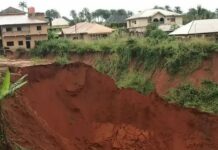
Behind every missing naira lies a human story. In Ubowalla, silence is measured in broken lives. Expectant mothers are ferried on wheelbarrows to clinics because ambulances cannot reach them. Children trudge through quagmires, their uniforms soaked in mud, many abandoning school entirely. Farmers watch crops rot in barns as buyers refuse to risk vehicles on the impassable road. The elderly die in villages cut off from hospitals. Yet because the project has been erased from official records, the victims have no channel to demand redress. They cannot sue, cannot petition, and cannot even prove the project was theirs to begin with. Silence here is not abstract — it is violence woven into daily existence.
Breaking the Quiet
Ubowalla cannot remain buried in bureaucracy. The citizens deserve disclosure of every paper tied to the ₦300 million — bidding documents, contract awards, mobilization letters, and invoices. They deserve an independent forensic audit, one not compromised by the executive’s grip. They deserve legislative hearings with officials under oath, compelled to answer for vanishing funds. They deserve civil and criminal prosecutions for every hand that touched the missing money. And above all, they deserve community oversight — the power for citizens to track projects in real time, ensuring never again will silence erase their rights.
Collusion Exposed
Hope Uzodinma may believe that silence buys him safety. But history is not fooled. Every betrayal buried in quiet eventually erupts into noise. The mud of Ubowalla is not just an inconvenience — it is physical evidence of fraud. Each puddle on that road is an indictment. Each schoolchild trudging through the swamp is testimony. Each rotting harvest is an affidavit. Silence may shield the guilty today, but it indicts them for tomorrow.
Silence is not neutrality. It is complicity. It is collusion. And collusion, no matter how carefully buried, always resurfaces.