










|
Listen to article
|
A ₦300m promise drowned in mud, betrayal, and silence
In 2022, Governor Hope Uzodinma’s administration announced that ₦300 million had been allocated for the construction of the Ubowalla Road in Emekuku, Owerri North. The project was trumpeted as proof of his “prosperity agenda,” a lifeline for a community cut off by seasonal floods and economic neglect.
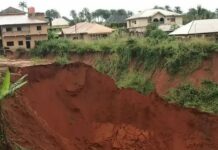
Today, three years later, the road is nothing but a swamp. No bulldozers, no graders, no asphalt. Just mud, water, and a growing sense of betrayal. For the people of Ubowalla, this is not merely a failed project, it is the loudest proof that their governor has abandoned them.
The Anatomy of a ₦300m Fraud
What exactly happened to the ₦300 million? In a state drowning in abandoned projects, the Ubowalla case stands out for its sheer audacity. There was no mobilization, no half-hearted attempt at grading, not even the facade of effort. The funds simply vanished into the ether of Imo State’s opaque governance machinery.
Budgets, of course, are public documents. The 2022 allocation for Ubowalla Road exists on paper. But in practice, the money has evaporated. This is not incompetence—it is fraud. It is governance reduced to cash withdrawal and leadership stripped to its rawest form of plunder.
Betrayal in Broad Daylight
Governor Uzodinma rose to power on the rhetoric of hope and prosperity. But the Ubowalla scandal reveals something darker: a leader who mistakes betrayal for governance.
When confronted with the suffering of Ubowalla, Uzodinma has offered only silence. And silence, in this context, is not neutrality—it is complicity. It is the governor’s tacit admission that the road project was never meant to be built, only to be budgeted, looted, and forgotten.
The Complicity of Silence
The scandal is compounded by the failure of Imo’s legislative institutions. The Imo State House of Assembly, constitutionally tasked with oversight, has chosen to look away. Their silence is not ignorance—it is collaboration. In their cowardly retreat from accountability, the Assembly has become a willing partner in betrayal, a rubber stamp for Uzodinma’s excesses.
What does it say about governance in Imo State when ₦300 million can vanish without a single probe, without a single public hearing, without even a pretense of outrage? It says that the system is broken, that the betrayal of Ubowalla is not an anomaly but a symptom of systemic decay.
Read also: Governor Uzodinma’s Betrayal: The Ubowalla Road Scandal
Roads as Tombstones of Corruption
Every impassable stretch of Ubowalla Road is more than a symbol of infrastructural decay—it is a tombstone of corruption. Each waterlogged ditch bears silent witness to the moral death of leadership in Imo State.
For the elderly who cannot reach hospitals, for the traders who watch their produce rot before it reaches the market, and for the schoolchildren who wade through floodwaters to get an education, the Ubowalla Road is not just mud—it is a daily reminder that their government has failed them.
The World Bank’s Warning Ignored
The World Bank’s 2024 Africa Infrastructure Report could not be clearer: rural communities in Nigeria face transport costs up to 80% higher than global averages due to neglected roads. For agricultural communities, this translates into devastating post-harvest losses.
By failing to deliver Ubowalla Road, Uzodinma has not just betrayed his constituents—he has condemned them to poverty. He has made Ubowalla a textbook case of how corruption translates into hunger, isolation, and death.
A Governor Without a Conscience
There are leaders who fail because they lack capacity. There are leaders who falter because the odds are against them. But Uzodinma falls into a darker category: a leader who betrays because it profits him.
His silence in the face of Ubowalla’s suffering is not an accident—it is a calculated decision. He knows the road is unbuilt, he knows the money is gone, and yet he says nothing. Why? Because in Uzodinma’s Imo, governance is not about service—it is about survival of the corrupt.
From Hope to Hopeless
Hope Uzodinma’s greatest betrayal is not simply the theft of ₦300 million, but the theft of faith itself. He has robbed Imo people of the belief that government can be trusted, that leaders can be accountable, that promises can be kept. He has turned hope into hopelessness, prosperity into plunder.
The Questions That Demand Answers
Until Governor Uzodinma provides answers, his legitimacy remains in tatters:
Where is the ₦300 million?
Who approved the phantom contracts?
Why has no contractor been sanctioned?
Why has the Assembly remained silent?
Why should Imo people trust him again?
The Verdict of History
History will not remember Uzodinma for his slogans. It will not remember him for his hollow rhetoric of “shared prosperity.” It will remember him for Ubowalla Road—for the swamp that swallowed ₦300 million, for the betrayal that drowned a people’s hope, and for the fraud that defined his tenure.
Conclusion: When Leadership Becomes Lootership
The Ubowalla Road scandal has stripped Uzodinma bare. It has revealed not a leader but a looter, not a governor but a betrayer, not a custodian of the people’s trust but a man who has traded it for silence and profit.
If governance is measured by integrity, then Uzodinma has failed. If leadership is measured by accountability, then Uzodinma has betrayed. If history is measured by legacy, then Uzodinma’s name will forever be linked to Ubowalla—a road that was never built, a promise that was never kept, a fraud that cannot be forgotten.
From hope to hopeless—that is the true journey of Hope Uzodinma’s Imo.