


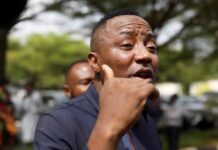










Omoyele Sowore, the African Action Congress candidate in Nigeria’s 2027 presidential race, called on Tuesday for the country to legalize and regulate cannabis, arguing that continued criminalization costs the treasury money that a licensed industry could raise.
Sowore made the case in a post on X, pointing to tax and sales receipts from Canada and the United States. He said Nigerian authorities keep arresting people, destroying farms and prosecuting growers while jurisdictions that have regulated the plant collect substantial revenue. He wrote that he has argued since 2018 that Nigeria should stop criminalizing an economically valuable plant and instead build a properly regulated industry.
The comparisons he cited can be checked against official figures. Statistics Canada reported that federal and provincial governments earned CA$2.2 billion from recreational cannabis in the fiscal year that ended March 31, 2024, a total that combined income from cannabis authorities, excise duties, retail sales taxes, other specific taxes and licensing fees. California’s tax authority recorded about $1.067 billion in cannabis tax revenue for 2024, and Colorado’s Department of Revenue logged $255.36 million in marijuana taxes and fees for the same year.
From those benchmarks, Sowore projected that Nigeria could raise between $550 million and $2.2 billion a year under different scenarios, depending on the size of a legal market and the strength of tax collection and regulation. At an illustrative rate of 1,300 naira to the dollar, the range works out to between 715 billion and 2.86 trillion naira. He described the numbers as hypothetical and said real receipts would turn on market size, taxation, licensing, exports and the effectiveness of regulators.
Read Also: NDLEA Seizes ₦5bn In Drugs, Nabs Milan Suspect
Beyond revenue, he said legalization could open jobs in farming, pharmaceutical manufacturing and industrial hemp production, and support scientific research and export earnings. He called for a legal framework that would regulate production, protect public health, support farmers and generate government income.
The law as it stands runs the other way. Cannabis is illegal in Nigeria under the Indian Hemp Act, which prohibits its cultivation, unlawful importation, sale, exportation, smoking and possession, and defines Indian hemp to cover plants and plant parts of the cannabis genus. The National Agency for Food and Drug Administration and Control has previously said that cultivation, consumption, handling and possession remain illegal. A legal analysis of the framework says possession without authority carries a prison term of 15 to 25 years under the National Drug Law Enforcement Agency Act, which The Eastern Updates could not independently verify against the statute.
Sowore’s intervention arrives while the statute book is under review. President Bola Tinubu has transmitted a National Drug Law Enforcement Agency Bill, 2026, to the Senate that seeks to repeal both the existing NDLEA Act and the Indian Hemp Act and to replace them with a consolidated framework for combating drug offenses. In a letter read by Senate President Godswill Akpabio, Tinubu described the bill as part of efforts to overhaul the legal framework for combating illicit drugs. A repeal does not by itself legalize or decriminalize cannabis.
Read Also: NDLEA, UAE Sign Pact To Choke Drug Routes Between Nations
Sowore reacted on October 14 to reports that the administration was considering changes, writing that Tinubu was reportedly talking about decriminalizing a plant he had advocated decriminalizing for years. Two months earlier, on August 18, he condemned NDLEA operations that destroy cannabis farms, saying Nigeria cannot burn its way out of poverty.
Opposition within officialdom has been firm. The NDLEA’s chief executive, Buba Marwa, said in 2021 that the agency rejects legalization in totality. The agency has also argued that proponents exaggerate the medicinal benefits of cannabis and that the drug fuels crime and insurgency, according to statements by its spokesman Femi Babafemi in 2022. In March 2023, Nigeria’s House of Representatives rejected a bill that would have amended the NDLEA law to allow cultivation for medical purposes, with lawmakers citing concerns about mental health.
The debate has not gone away. The National Assembly was reported in May to be drafting a bill to legalize cannabis for medicinal and economic use, and the NDLEA has said previously that it is open to dialogue on cannabis oil for its health benefits, provided any move is guided by evidence. Participants at an earlier stakeholder forum said that any shift must rest on scientific evidence and strong regulatory systems and be consistent with Nigeria’s social and cultural context.
Nigeria’s next general election is scheduled for 2027, and Sowore is the African Action Congress candidate.