









|
Listen to article
|
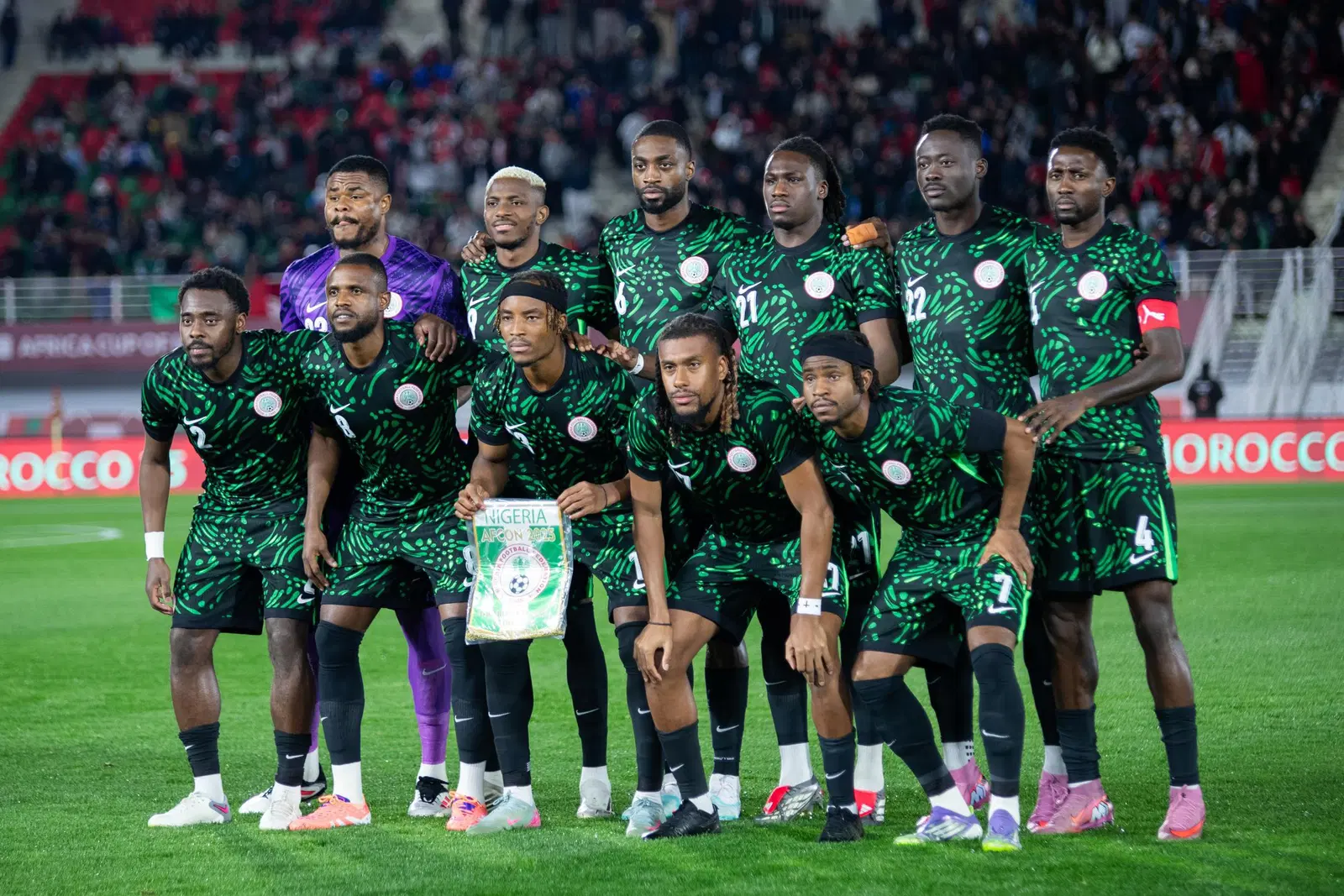
FIFA has fined the Nigeria Football Federation and the Congolese Football Association for separate fan misconduct violations recorded during their disputed 2026 World Cup African play-off final in Morocco last November, while the far more consequential question of whether DR Congo fielded ineligible players in that match remains unresolved and no official ruling has been communicated to either federation.
According to FIFA’s latest disciplinary overview released for the World Cup qualifying series, both bodies were found guilty of separate infractions during the match played on November 16, 2025. Nigeria was sanctioned for a failure to maintain order and security, specifically the throwing of objects by spectators. The offence fell under Article 17 and Article 17.2.b of the FIFA Disciplinary Code and resulted in a fine of 1,000 Swiss francs against the NFF. DR Congo received a heavier penalty. FIFA found that Congolese supporters had used laser pointers and similar electronic devices during the match, an offense under Article 17.2.d of the code, leading to a 5,000 Swiss franc fine against the Congolese federation.
FIFA emphasized in its notice that disciplinary decisions are taken on the basis of individual case circumstances and remain subject to appeal. The governing body noted that the public summary of sanctions is primarily intended for media reference and that official legal decisions are communicated directly to the concerned federations. Neither the NFF nor FECOFA had publicly commented on whether they intended to contest the fines as of Sunday.
The match that produced both sets of violations was one of the most contentious in recent African football history. DR Congo defeated Nigeria 4-3 on penalties at the Prince Moulay Abdellah Stadium in Rabat after a match that ended 1-1 at full time, advancing to the intercontinental play-offs as Africa’s best-placed loser in the qualification structure. Super Eagles head coach Eric Chelle, in remarks widely reported after the defeat, alleged that DR Congo officials had employed voodoo rituals during the match — a claim that drew both ridicule and sympathy in Nigerian football discourse, but which has had no bearing on any formal FIFA proceeding.
The substantive dispute, however, concerns something considerably more concrete. Following the defeat, the NFF submitted a formal petition to FIFA on December 15, 2025, arguing that the Congolese federation had misled the governing body in processing nationality switches for a significant number of overseas-born players who represented DR Congo in the decisive fixture. The complaint, made public by journalist Osasu Obayiuwana, listed seventeen players by name — nine starters and eight substitutes — whose eligibility Nigeria questioned. Among those named were Aaron Wan-Bissaka, Axel Tuanzebe, Arthur Masuaku, Samuel Moutoussamy, Ngal’ayel Mukau, Noah Sadiki, Nathanaël Mbuku, Cedric Bakambu, and Lionel Mpasi from the starting lineup, and Timothy Fayulu, Matthieu Epolo, Joris Kayembe, Edo Kayembe, Steve Kapuadi, Gedeon Kalulu, Michel-Ange Balikwisha, and Mario Stroeykens among substitutes used or available.
Read Also: Former Super Eagles Coach Adegboye Onigbinde Is Dead
The NFF’s central argument is that the Democratic Republic of Congo does not legally recognize dual citizenship for adults under its domestic law, raising fundamental questions about the validity of nationality switches granted to players who hold European passports. NFF General Secretary Mohammed Sanusi said “As far as FIFA is concerned, once you have the passport of your country, you are eligible. But our concern is that FIFA may have been deceived into clearing them.”
Nigeria also argued that several of the disputed players obtained clearance from FIFA to represent DR Congo only days before the decisive play-off match despite having been called into the squad earlier, and that some had previously represented other countries at youth level.
Sunday’s disciplinary overview made no reference whatsoever to Nigeria’s eligibility protest or to the status of any FIFA proceeding arising from the NFF’s petition. The absence of any mention could reflect the standard practice of keeping pending disciplinary proceedings separate from routine sanction summaries, or it could indicate that no formal disciplinary case has yet been opened — a distinction the NFF has been unable to clarify.
National Sports Commission Chairman Shehu Dikko has urged Nigerian football supporters to exercise restraint in interpreting available information. “As far as we know, FIFA is yet to give its verdict,” Dikko said. “We are monitoring the situation closely. The fact that DR Congo appears among the six nations to compete for the final two spots in the playoff is not enough to jump to the conclusion that FIFA has thrown out Nigeria’s petition. We are very hopeful that Nigeria will win the eligibility case, and the Super Eagles will proceed to play in the playoff, and possibly make the World Cup party. I want all Nigerians to remain calm and wait for the final verdict.”
Read Also: FIFA Snubs Super Eagles’ World Cup Run, Confirms DR Congo
DR Congo is currently listed in FIFA’s intercontinental play-off bracket as the sixth qualifying berth from Africa, matched against the winner of the Jamaica versus New Caledonia semi-final on March 31. Their 26-man squad for that fixture — announced by head coach Sébastien Desabre — notably omits Michel-Ange Balikwisha and Mario Stroeykens, two of the players named in Nigeria’s eligibility petition. The Congolese federation has not publicly acknowledged that the omissions are connected to the pending NFF complaint.
The legal question at the heart of the eligibility dispute is not straightforward. Players switching nationalities must complete a formal eligibility confirmation process through FIFA under Article 9 of the FIFA Regulations Governing the Application of the Statutes, and under Article 7 of the FIFA Statutes, players may represent the nation for which they hold a passport — provided the remaining eligibility switch criteria are met. Nigeria’s argument is not that DR Congo broke the rules as FIFA formally defines them, but that the Congolese federation obtained FIFA’s approval through incomplete or misleading information about the players’ actual eligibility under DR Congo’s own domestic citizenship law. If FIFA finds procedural violations, potential outcomes range from fines and sanctions against the federation to, in extreme cases, the overturning of the match result — though such outcomes are rare in playoff rather than group-stage contexts.
No FIFA press statement on the status of the NFF’s eligibility petition has been issued. The intercontinental play-off bracket remains unchanged as of Sunday, with DR Congo’s participation not yet formally challenged by any ruling. The March 31 fixture is scheduled to proceed unless FIFA issues an extraordinary ruling in the remaining two weeks.