














|
Listen to article
|
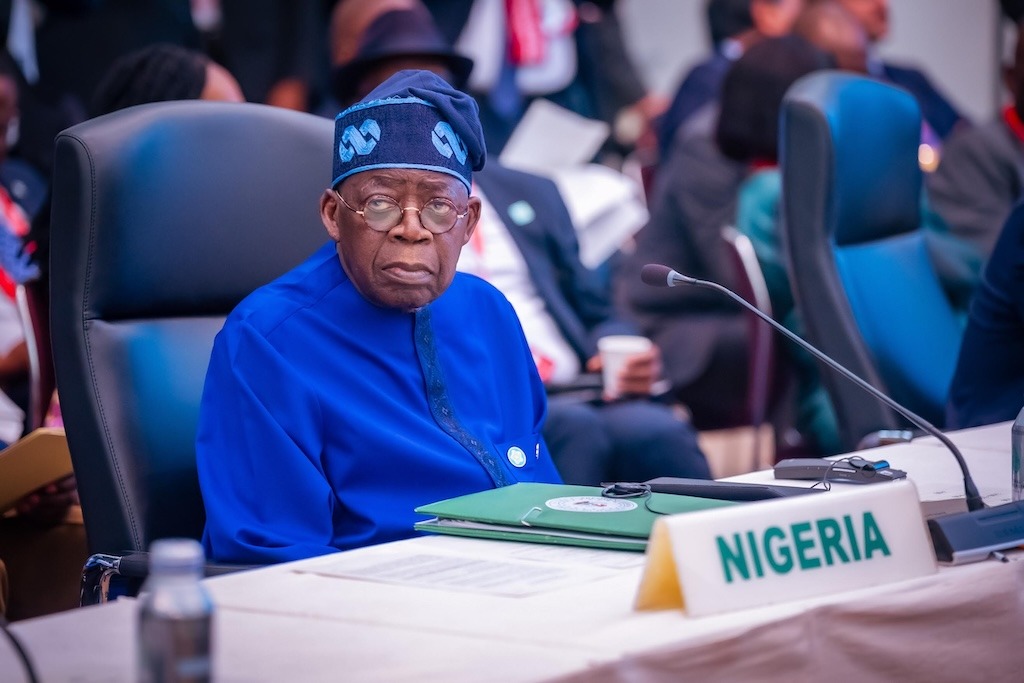
President Bola Tinubu has signed an Executive Order, EO, to safeguard and enhance oil and gas revenues for the Federation, curb wasteful spending, eliminate duplicative structures in this critical sector of the national economy, and redirect resources for the benefit of the Nigerian people.
His Special Adviser on Information and Strategy, Bayo Onanuga disclosed this in a statement on Wednesday, stressing that Tinubu signed the EO in pursuance of Section 5 of the Constitution of the Federal Republic of Nigeria (as amended).
The Eastern Updates reports that the Executive Order is anchored on Section 44(3) of the Constitution, which vests ownership, control, and derivative rights in all minerals, mineral oils, and natural gas in, under, and upon any land in Nigeria, including its territorial waters and Exclusive Economic Zone, in the Government of the Federation.
According to the statement, the directive seeks to restore the constitutional revenue entitlements of the Federal, State, and Local Governments, which were taken away in 2021 by the Petroleum Industry Act, PIA.
Read Also: 2027 Presidential Election Holds On February 20 – INEC
The PIA created structural and legal channels through which substantial Federation revenues are lost through deductions, sundry charges, and fees.
Under the current PIA framework, NNPC Limited retains 30 per cent of the Federation’s oil revenues as a management fee on Profit Oil and Profit Gas derived from Production Sharing Contracts, Profit Sharing Contracts, and Risk Service Contracts.
The statement noted that given the existing 20% retention, the additional 30% management fee is considered unjustified by the Federal Government, as the retained earnings are already sufficient to support the functions NNPCL performs under these contracts.
“NNPC Limited also retains another 30% of its oil and profit gas under the production sharing, profit sharing, and risk service contracts, as the Frontier Exploration Fund under sections 9(4) and (5) of the PIA. A fund of this size, being devoted to speculative exploration, risks accumulating large idle cash balances, which would encourage inefficient exploration spending, at a time when government resources are urgently needed for core national priorities, including security, education, healthcare, and energy transition investments.
“There is also the Midstream and Downstream Gas Infrastructure Fund (MDGIF) under Section 52(7)(d) PIA, funded by the collection of gas flaring penalties provided under Section 104. The fund is to be used for supporting environmental remediation and relief for host communities impacted by gas flaring.
“However, section 103 of the PIA has already established a dedicated Environmental Remediation Fund, administered by NUPRC, specifically designed to fund the rehabilitation of communities negatively impacted by upstream petroleum operations, including gas flaring. Furthermore, Section 103 already imposes a fee on lessees to contribute to this fund for precisely this purpose,” the statement read in part.
Read Also: E-Transmission: Senate Reveals Why ‘Real Time’ Was Removed
President Bola Tinubu has signed the Electoral Act, 2022 (Repeal and Re-Enactment) Bill 2026 into law.
This follows the passage of the bill by the National Assembly on Tuesday after months of deliberations.
The Eastern Updates reports that the Senate on Tuesday approved electronic transmission of election results, with manual collation retained as a backup.
The president assented the bill at the State House on Wednesday in the presence of top government officials, including the Senate President, Godswill Akpabio; the Speaker of the House of Representatives, Tajudeen Abbas; and the Chief of Staff to the President, Femi Gbajabiamila.
Speaking after he signed the bill, Tinubu said the essence of democracy is to have very solid discussions committed to national development and nation-building, essential for the stability of the nation, adding that it was high time Nigerians had confidence in their system.
“It’s not as important as the history aspects of this. What is crucial is the fact that you manage the process to the extent there will be no confusion, no disenfranchisement of Nigerians, and that we are all going to see democracy flourish.
“No matter how good the system is, it’s managed by the people, promoted by the people, and the result is finalised by the people,” he said.
Weighing in on the ongoing debates over the transmission of election results, the president said, “In fact, for final results, you are not going to be talking to the computer; you are going to be talking to human beings who will announce the final results.
“And when you look at the crux of various arguments, maybe Nigerians should question our broadband capability. How technically are we today? How technically will we be tomorrow to answer the call in real-time or not?
“And as long as you appear personally, as a manual voter in any polling booth, a ballot paper is given to you manually, you decide in a corner and thumbprint the passing of your choice, you cast your votes, without hindrance and any interference, ballots are subsequently counted manually, sorted, and counted manually.
“It’s just the arithmetic accuracy that is to enter into Form EC8A. It’s the manual, essentially. The transmission of that manual result is what we’re looking at.
“And we need to avoid glitches — I’m glad you did — interference, unnecessary hacking in this age of computer inquisitiveness.
“Nigeria will be there. We will flourish. We will continue to nurture this democracy for the fulfillment of our dream for the prosperity and stability of our country,” the President added.